

You reach into a cabinet. Put on a shirt. Lift a grocery bag. Reach behind you in the car.
And your shoulder hurts.
The first instinct is often: “I shouldn’t do that movement.”
But sometimes the better question is:
“Why is this movement difficult right now—and how can we help my shoulder do it better?”
Start With the Basics
Shoulder pain can involve the rotator cuff, tendons, joints, muscles, or surrounding tissues. Sometimes symptoms felt in the shoulder can even be influenced by the neck.
But a diagnosis or MRI finding doesn’t tell us everything about how you move.
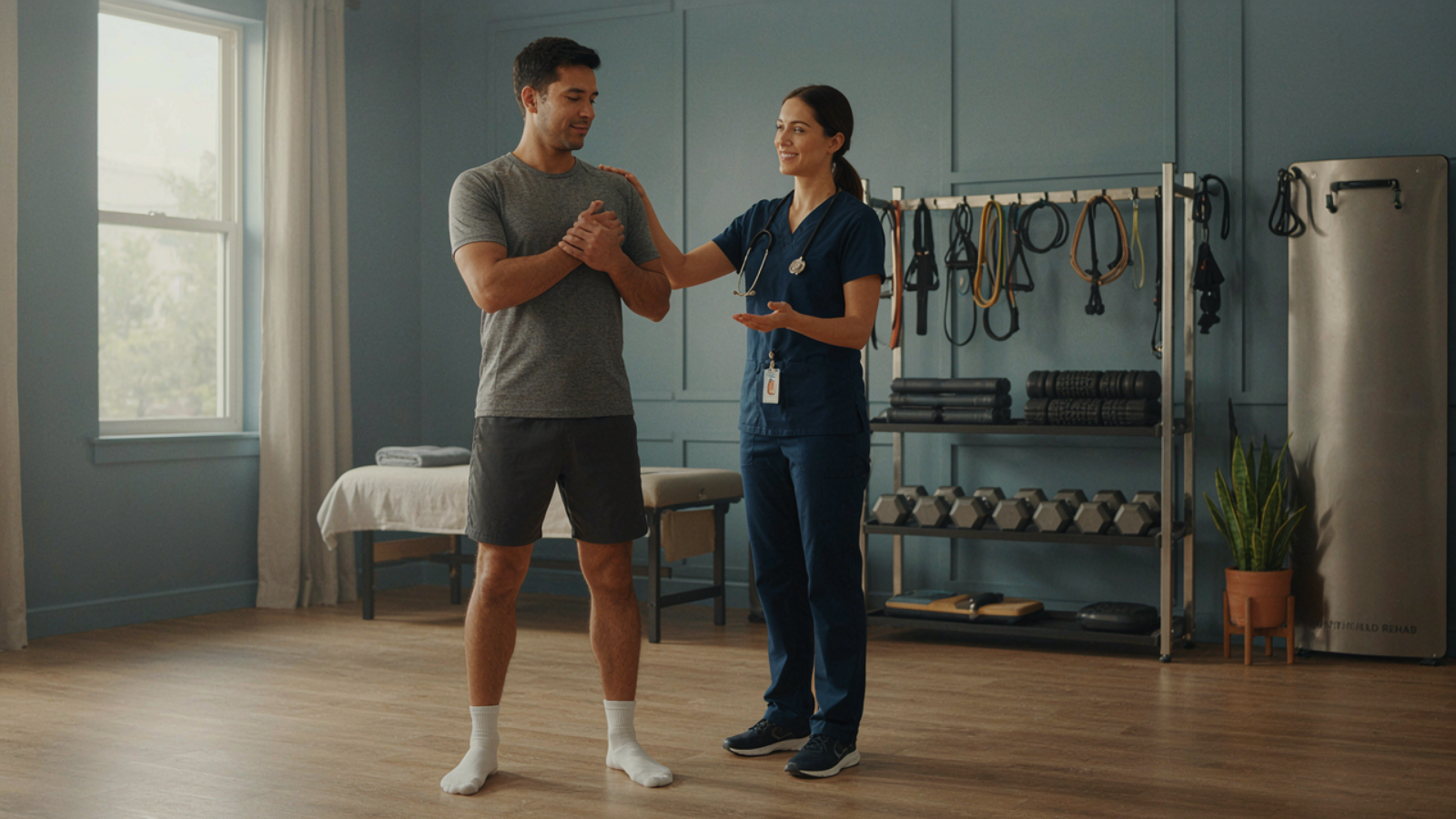
At Elite Physical Therapy, we want to see your shoulder in action.
Can you lift your arm?
Where does it become uncomfortable?
What happens if we change the angle?
Does your shoulder blade move well?
What happens when we add a little resistance?
Can you push, pull, carry, or reach?
And most importantly:
What are you trying to get back to doing?
Don’t Be Afraid to Move
Pain doesn’t automatically mean that every painful movement is damaging your shoulder.
And avoiding a movement forever usually isn’t the answer either.
Instead, we find what your shoulder can tolerate today.
Maybe lifting all the way overhead hurts, but lifting halfway feels fine.
Good. That’s somewhere we can start.
We work near the edge of what you can comfortably do, occasionally challenging that edge, and then gradually expand it.
Move. Assess. Adjust. Progress.
Your shoulder learns by doing.
Build the Foundation First
Sometimes the answer isn’t a complicated exercise.
We may need to go back to basics:
Mobility → control → strength → functional movement.
Can you move the shoulder comfortably?
Can you control your shoulder blade and arm?
Can you tolerate resistance?
Can you push and pull?
Can you carry?
Can you reach overhead?
Once the foundation is there, exercises should become progressively more like real life.
Your Shoulder Doesn’t Work by Itself
Reaching overhead isn’t just a shoulder exercise.
Your shoulder blade moves. Your upper back moves. Your trunk provides support. Your arm has to produce and control force.
That’s why simply strengthening one small shoulder muscle may not be enough.
We look at the whole movement, determine where the problem is occurring, and then work on the pieces that matter for you.
Then We Make It Functional
This is where rehabilitation should become personal.
Someone who wants to reach into a kitchen cabinet needs something different from someone who wants to garden, swim, play tennis, lift weights, or return to an overhead job.
Your rehabilitation might progress from:
basic movement → resistance → pushing and pulling → carrying → reaching → overhead work → your actual activity.
We don’t want you doing the same three exercises forever.
As your body adapts, the exercise should progress too.
What If an Exercise Hurts?
We don’t automatically stop every movement that causes discomfort.
We also don’t believe in forcing your way through significant pain.
Instead, we ask:
What happens if we change it?
Change the range.
Change the position.
Change the resistance.
Change the speed.
Change the number of repetitions.
Sometimes a small change makes a difficult movement surprisingly comfortable.
That information helps us understand your shoulder—and gives us somewhere to begin.
We Do Things Differently at Elite
At Elite Physical Therapy, treatment isn’t based on handing everyone with shoulder pain the same exercise sheet.
We listen to your story.
We assess how you move.
We go back to the basics when necessary.
We identify what you can already do well.
Then we progressively challenge your shoulder until it can handle what your life requires.
The goal isn’t simply to have less pain on the treatment table.
The goal is to build a shoulder you can trust when you use it.
When Should You Have Shoulder Pain Evaluated?
If shoulder pain keeps returning, limits your movement, interferes with sleep, or prevents you from working, exercising, or doing normal daily activities, a physical therapy evaluation can help identify what is limiting you and where rehabilitation should begin.
Seek prompt medical care following significant trauma or for symptoms such as obvious deformity, substantial swelling, sudden significant weakness, or inability to move the arm.
Let’s Find Your Starting Point
Your shoulder may not need more protection.
It may need the right movement, at the right level, progressed at the right time.
At Elite Physical Therapy, that’s where we start.

www.elitephysicaltherapyclinic.com